
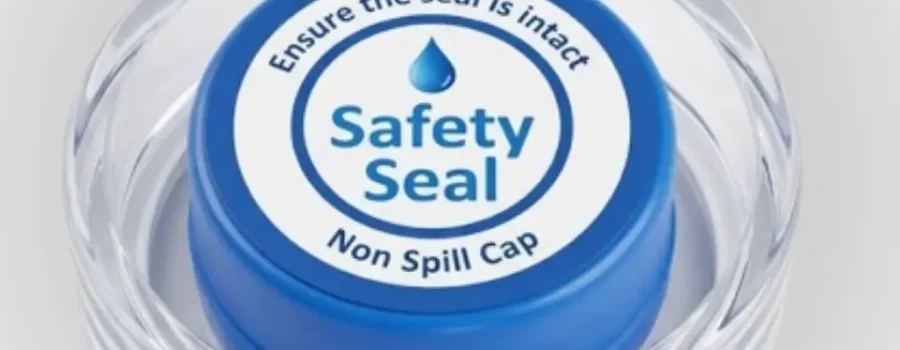
19-litre water bottles are widely used in homes, offices, schools, commercial buildings, and water delivery businesses. Because these bottles are often handled, transported, and reused, choosing the right cap is an important part of maintaining product hygiene, protecting the bottle opening, and supporting reliable dispensing.
A suitable 19-litre water bottle cap should fit the bottle correctly, provide a dependable closure, and offer appropriate tamper evidence for the packaging system. For water bottlers and packaging suppliers, cap selection also involves material quality, manufacturing consistency, filling-line compatibility, and food-contact requirements.
This guide explains the common types of 19-litre water bottle caps, their features, how to choose the right option, and what businesses should consider when sourcing them.
What Is a 19-Litre Water Bottle Cap?
A 19-litre water bottle cap is a closure designed for large-format water containers, commonly used with water dispensers and refillable water delivery systems.
The cap closes the bottle opening after filling and helps protect the contents from external contamination during storage, transportation, and distribution. Depending on its design, it may also include a tamper-evident feature that provides visible evidence if the bottle has been opened.
Not every 19-litre bottle uses the same neck design or closure. Caps must be selected to match the specific bottle opening and intended dispensing system.
Why Are 19-Litre Water Bottle Caps Important?
1. Helping Protect Water Hygiene
Water packaging must be handled carefully to reduce the risk of contamination. A correctly fitted cap helps cover the bottle opening and protect it during distribution and storage.
The cap should be manufactured from suitable materials, handled hygienically, and stored in conditions that protect it from dust and contamination before use.
A cap alone cannot guarantee that drinking water is safe. Water quality, bottle cleaning, filling practices, sanitation, and hygienic handling are also essential.
2. Providing a Reliable Closure
A suitable cap should fit the bottle neck as intended and remain securely attached throughout normal handling and transport.
Poor compatibility or inconsistent cap dimensions can contribute to loose closures, leakage, or difficulties on filling lines. Selecting a cap designed for the specific bottle finish helps support consistent closure performance.
3. Supporting Tamper Evidence
Many 19-litre water bottle caps incorporate a tamper-evident ring, tear feature, or another security mechanism.
These features are designed to show visible evidence of opening. If the tamper-evident feature is broken, missing, or appears altered before delivery, the bottle should be checked according to the water supplier’s safety procedures.
Tamper evidence does not make a package impossible to open or guarantee the purity of its contents. It is one part of a broader packaging and quality-control process.
4. Supporting Safe Transportation and Delivery
Large water bottles may pass through filling facilities, warehouses, delivery vehicles, offices, and homes. During these stages, caps are exposed to routine handling and movement.
A suitable closure helps protect the opening and maintain the intended package seal. Bottles should still be stored, secured, and transported using appropriate procedures.
5. Supporting Consistent Bottling Operations
Water bottling businesses need caps that work consistently with their bottles and filling equipment.
Dimensional accuracy, material consistency, tamper-band performance, and compatibility with capping machinery can all influence production efficiency. Suitable caps help businesses establish a repeatable packaging process and reduce avoidable closure-related problems.
Common Types of 19-Litre Water Bottle Caps
The right cap depends on the bottle design, filling process, dispensing method, and required level of tamper evidence.
1. Standard Plastic Caps
Standard plastic caps are commonly used for large-format water containers. They are designed to fit a compatible bottle neck and close the opening securely.
When selecting a standard cap, businesses should confirm the material, dimensions, closure design, and intended use rather than assuming that all caps for large water bottles are interchangeable.
2. Tamper-Evident Caps
Tamper-evident caps include a feature designed to show whether the closure has been opened. This may be an integrated breakable ring or another mechanism suited to the bottle design.
These caps are particularly relevant to packaged drinking water supplied to homes and offices, where customers need a clear indication of whether the bottle’s closure appears intact.
The tamper-evident feature must be compatible with the bottle neck and should function consistently during filling, distribution, and first opening.
3. Caps for Refillable Water Bottles
Refillable water bottles are returned, cleaned, inspected, and filled again according to the water business’s procedures.
The closure selected for a refillable bottle must be suitable for the bottle’s neck and the filling system. Businesses should also consider whether the cap is intended for one-time use or a specific reusable closure arrangement.
A cap should not be reused simply because it appears undamaged. Follow the closure manufacturer’s instructions and the bottler’s hygiene and quality-control procedures.
4. Caps with Dispenser-Compatible Features
Some large-format water closures are designed to work with particular water dispenser systems. Their design may support the intended bottle loading or water-release arrangement.
Compatibility varies by bottle and dispenser design, so businesses should confirm the required dimensions and dispensing mechanism before ordering.
What Materials Are Used for 19-Litre Water Bottle Caps?
Plastic is commonly used for large-format water bottle closures. The material must be suitable for its intended food-contact application and capable of performing under expected manufacturing, storage, and handling conditions.
Polypropylene (PP)
Polypropylene is used in many packaging closures because it can provide useful stiffness and dimensional performance. Its suitability depends on the specific formulation, design, and applicable food-contact requirements.
Polyethylene (PE)
Different polyethylene grades may be used in closure applications. The correct grade depends on the cap design and the performance required.
How to Select the Right Material
Before placing an order, businesses should confirm:
- Suitability for contact with drinking water.
- Compliance documentation for the intended market.
- Dimensional stability and closure performance.
- Compatibility with the bottle and filling equipment.
- Consistency between production batches.
- Any applicable requirements for hygiene, storage, and transport.
Do not assume that every plastic cap is food-grade simply because it is intended for a water bottle. Request appropriate documentation from the supplier.
How to Choose the Right 19-Litre Water Bottle Cap
Selecting a suitable cap requires attention to several factors.
1. Check the Bottle Neck Size and Design
Bottle neck compatibility is one of the most important selection criteria. Confirm the neck dimensions, finish, and closure arrangement specified by the bottle manufacturer.
A cap that looks similar to the correct model may still have an incompatible fit. If possible, provide a bottle sample or an approved technical drawing to the supplier.
2. Consider the Bottle Material
Large-format water bottles may use different container materials and designs. The cap must be compatible with the particular bottle, including its opening geometry and intended use.
Do not rely on bottle capacity alone to determine cap compatibility.
3. Evaluate the Tamper-Evident Design
If tamper evidence is required, check how the feature operates, whether it remains intact during normal transport, and whether it provides clear evidence of first opening.
The design should work with the bottle neck and the capping equipment without compromising the intended closure.
4. Review Food-Contact Suitability
For drinking water applications, ask the supplier for relevant material specifications and food-contact documentation.
Requirements vary by market, so confirm that the documentation applies to the material, product, and destination market involved.
5. Confirm Filling-Line Compatibility
For bottling plants, the cap must work with the existing capping equipment and production process.
Discuss cap dimensions, application method, line speed requirements, and closure quality checks with the cap supplier and equipment manufacturer.
6. Compare Supplier Quality and Consistency
When evaluating suppliers, consider more than unit price. Review dimensional consistency, product samples, technical documentation, delivery capacity, batch traceability where applicable, and the supplier’s quality-control process.
A consistent cap specification helps reduce compatibility issues and makes repeat purchasing easier.
Common Problems with 19-Litre Water Bottle Caps
Loose or Poorly Fitting Caps
A poor fit may result from incompatible bottle and cap dimensions, manufacturing variation, or an unsuitable closure design. Confirm compatibility with the bottle manufacturer and supplier.
Leakage During Handling
Leakage may be associated with an unsuitable closure, bottle damage, improper application, or another packaging issue. Investigate the complete bottle-and-cap system instead of assuming the cap alone is responsible.
Tamper-Evident Rings Breaking Too Early
If tamper-evident features break during filling or transportation, check product compatibility, closure specifications, application conditions, and handling procedures with the relevant supplier or equipment specialist.
Caps That Are Difficult to Apply or Open
Opening and application performance depend on the cap design, bottle neck, material, and application process. Confirm the required specification and have the system assessed by qualified personnel if recurring problems occur.
Inconsistent Cap Quality
Variation in dimensions, material properties, or tamper-band performance can create difficulties for bottling operations. Request samples, agreed specifications, and appropriate quality documentation before committing to large orders.
Best Practices for Handling and Storing Water Bottle Caps
Correct cap selection should be supported by good storage and handling practices.
- Store caps in clean, dry, protected packaging.
- Follow the manufacturer’s storage instructions.
- Keep caps protected from dust, moisture, and unnecessary handling before use.
- Use suitable hygiene procedures in the bottling area.
- Inspect incoming caps for visible damage or contamination.
- Verify that the cap matches the approved bottle specification.
- Monitor closure performance through the bottler’s quality-control process.
- Keep supplier specifications and relevant documentation available for review.
These practices help protect closure quality, but the finished product’s safety also depends on water treatment, bottle sanitation, filling hygiene, and other controls.
Conclusion
19-litre water bottle caps are important packaging components for large-format drinking water. They help close the bottle opening, support hygiene during distribution, and can provide visible tamper evidence when designed for that purpose.
The best cap is not necessarily the cheapest or the one that fits the most bottle types. It is the cap that matches the bottle neck, meets the intended food-contact requirements, works with the filling and dispensing system, and performs consistently in real operating conditions.
Whether you operate a water bottling plant, supply packaging materials, or manage water delivery services, confirm compatibility and technical specifications before placing an order.
If your business needs 19-litre water bottle caps, consult a packaging supplier about available designs, material documentation, tamper-evident options, and compatibility with your bottles and equipment.