
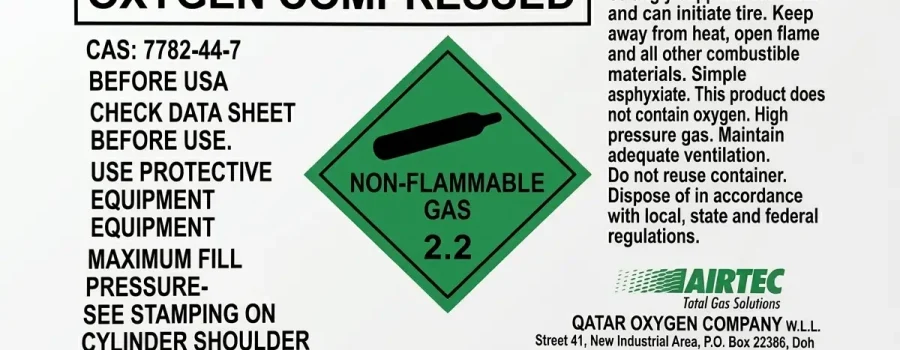
Industrial gas cylinders are used across manufacturing, welding, healthcare, laboratories, construction, and many other industries. Because these cylinders may contain flammable, toxic, corrosive, oxidizing, or pressurized gases, clear identification and hazard communication are essential for safe handling.
Industrial gas cylinder stickers and labels help workers identify cylinder contents, recognize potential hazards, and understand important precautions. They also support inventory management, workplace procedures, and compliance with applicable safety requirements.
However, labels must be accurate, legible, suitable for the cylinder’s service conditions, and consistent with the relevant regulations. Understanding their purpose helps businesses maintain better cylinder identification and safety practices.
What Are Industrial Gas Cylinder Stickers and Labels?
Industrial gas cylinder stickers and labels are identification and warning materials applied to cylinders or associated packaging. They communicate important information about the gas, its hazards, and the precautions required when handling or storing it.
Depending on the gas and application, a label may include:
-
Gas name or product identifier
-
Hazard symbols and pictograms
-
Relevant warning and precautionary statements
-
Supplier or manufacturer information, where required
-
Handling, storage, or emergency information, where applicable
-
Traceability or product details required by the relevant system
The exact information depends on the gas classification, cylinder use, destination market, and applicable regulations or standards.
Labels should not be confused with permanent cylinder markings, which may provide technical information about the cylinder itself. Both forms of information may be important, but they serve different purposes.
Why Do Industrial Gas Cylinder Stickers and Labels Matter?
1. Identifying Cylinder Contents
One of the most important purposes of a gas cylinder label is to help users identify the contents correctly.
Industrial facilities may store several different gases in the same area. Without clear identification, workers could select the wrong cylinder or connect unsuitable equipment.
Readable labels help distinguish one gas from another and support correct selection during storage, movement, and use. Workers should always verify the cylinder identification and follow established procedures rather than relying on the cylinder’s appearance or colour alone.
2. Communicating Potential Hazards
Different gases present different hazards. Some may be flammable, others may support combustion, and some may be toxic, corrosive, or capable of causing cold burns.
Appropriate hazard labels communicate relevant risks through recognized pictograms, warning text, and precautionary statements. This information helps workers recognize hazards before handling a cylinder or using its contents.
For example, the gas-cylinder pictogram used in the Globally Harmonized System identifies hazards associated with gases under pressure. Other pictograms may be needed depending on the gas’s classification.
The appropriate symbols and wording must be determined from the gas classification and applicable labeling requirements, not chosen simply for visual appeal.
3. Supporting Safer Handling and Storage
Clear labeling helps workers understand which precautions apply to a particular cylinder. This information can support decisions about storage arrangements, handling procedures, personal protective equipment, and segregation of incompatible materials.
For example, cylinders containing different gases may require different precautions. Correct identification helps employees follow the appropriate procedures and consult the relevant safety information.
Labels alone do not make a cylinder safe. Safe storage, suitable ventilation, secure cylinder positioning, training, and compliance with supplier instructions remain essential.
4. Reducing the Risk of Cylinder Mix-Ups
Cylinder mix-ups can occur when several containers look similar or are stored close together. Clear, consistent labels help workers distinguish products during receiving, inventory checks, distribution, and use.
This is particularly important in facilities that manage multiple gas types, cylinder sizes, or gas mixtures.
A consistent labeling process also helps staff identify missing, damaged, or unreadable labels before a cylinder is handled or dispatched.
5. Supporting Workplace Safety Procedures
Industrial safety depends on workers having access to reliable information at the right time.
Cylinder labels can reinforce workplace procedures by displaying the required product identity and hazard information. They also help employees connect the information on a cylinder with its safety data sheet, training materials, and site-specific operating instructions.
Employers should ensure workers know how to interpret the labels and where to find more detailed safety information.
6. Helping Businesses Meet Applicable Requirements
Gas cylinder labeling requirements vary by country, transport method, gas classification, and intended use. Depending on the application, businesses may need to follow chemical hazard communication rules, dangerous-goods transport requirements, and relevant cylinder-labeling standards.
ISO 7225 addresses the design, content, and application of precautionary labels for individual gas cylinders containing single gases or gas mixtures. Other legal or industry requirements may also apply.
Businesses should confirm the requirements for their specific products and markets rather than assuming that one label design meets every regulatory obligation.
7. Improving Inventory and Product Traceability
Accurate labels help businesses identify cylinders as they move through storage, distribution, and operational processes.
Where required information is included, labels and associated records can support product identification, stock control, and traceability procedures.
However, a label should not be treated as a substitute for required permanent cylinder markings, inspection records, or other documentation. Businesses should maintain the records required for their particular cylinder and gas operations.
Common Types of Industrial Gas Cylinder Stickers and Labels
The label types used depend on the gas, its classification, and the purpose of the information being communicated.
Gas Identification Labels
These labels identify the gas or gas mixture contained in the cylinder. They help workers select the correct product and distinguish cylinders during handling and storage.
Hazard Warning Labels
Hazard labels communicate specific risks through recognized symbols, pictograms, and warning information. Depending on the gas classification, these may indicate hazards such as flammability, toxicity, corrosivity, oxidizing properties, or gas under pressure.
Precautionary Labels
Precautionary labels provide information about safe handling, prevention measures, emergency response, or storage. Their content must match the applicable requirements and the hazards associated with the gas.
Product and Supplier Information Labels
Depending on the application, labels may also display product identifiers and supplier details. Any required information should be accurate, readable, and consistent with the relevant labeling system.
Custom Industrial Labels
Businesses may use custom-designed labels for internal identification, stock management, or operational instructions. Custom labels should supplement—not replace—mandatory hazard and product labeling. Their design must not obscure required information or introduce confusing symbols.
What Makes a Good Industrial Gas Cylinder Label?
A suitable label should remain readable and securely attached throughout its intended service life. Businesses should evaluate the following characteristics when selecting labels.
Durability
Cylinder labels may be exposed to handling, abrasion, moisture, dirt, temperature changes, and outdoor conditions. Label materials and adhesives should be suitable for the actual environment and application.
Readability
Text and pictograms should be clear, legible, and appropriately sized. Important warnings should not be obscured by other labels, cylinder fittings, dirt, or damage.
Correct Information
The gas name, hazard information, and any required product details must be accurate. Incorrect or outdated information can create confusion and undermine safe handling procedures.
Adhesion and Surface Compatibility
The label and adhesive should be suitable for the cylinder’s surface and expected service conditions. Businesses should follow the label manufacturer’s recommendations for surface preparation, application, and maintenance.
Regulatory Suitability
A visually attractive label is not necessarily a compliant one. Confirm that the design, content, symbols, size, placement, and language meet the requirements for the intended market and use.
Best Practices for Industrial Gas Cylinder Labeling
Businesses can improve cylinder identification by establishing a consistent labeling process.
-
Verify the cylinder contents and classification before applying or replacing a label.
-
Use labels designed for the relevant gas, cylinder surface, and operating environment.
-
Follow applicable standards and local regulatory requirements.
-
Keep mandatory product and hazard information visible and legible.
-
Inspect labels regularly and replace damaged or unreadable labels through an authorized procedure.
-
Do not cover, remove, alter, or obscure required information or permanent cylinder markings.
-
Train employees to interpret hazard pictograms and follow the associated safety procedures.
-
Consult the relevant safety data sheet and gas supplier when additional information is needed.
If a cylinder’s contents cannot be reliably identified, do not guess based on its colour, shape, or location. Follow the site’s procedures for isolating and reporting unidentified cylinders and seek guidance from qualified personnel or the gas supplier.
Common Mistakes to Avoid
Relying on Colour Alone
Cylinder colours may vary by country, supplier, industry, or gas identification system. Colour should not replace the required label and other identification checks.
Using Incorrect or Outdated Information
A label with an incorrect gas name, hazard symbol, or warning can mislead workers. Always verify information against authoritative product documentation and applicable requirements.
Choosing Labels Only by Price
Low-cost labels may not withstand the intended environment or remain legible for the required period. Consider durability, adhesion, readability, and regulatory suitability when comparing options.
Ignoring Damaged Labels
Peeling, faded, dirty, or unreadable labels can make cylinder identification difficult. Establish an inspection and replacement process that follows the supplier’s instructions and applicable requirements.
Treating Custom Stickers as Compliance Labels
Branding and inventory stickers can be useful, but they must not replace required hazard communication or obscure mandatory information.
Conclusion
Industrial gas cylinder stickers and labels are an important part of cylinder identification and workplace hazard communication. They help workers identify gas contents, recognize potential hazards, follow handling precautions, and reduce the risk of cylinder mix-ups.
To get the most benefit from labeling, businesses should use accurate information, durable and compatible materials, readable designs, and labels that meet the requirements of the intended market. Regular inspection and appropriate employee training are equally important.
If your business needs industrial gas cylinder stickers or labels, consult a qualified supplier about material suitability, label durability, required information, and compliance with the applicable standards and regulations.
1 Comment
Dolorum id laborum labore. Rem ipsam tempore iusto dignissimos harum. Sit porro molestiae reiciendis incidunt alias aut magni aliquam. Voluptatum aspernatur occaecati nisi ad odit esse. Sunt rerum ad ab blanditiis velit. Nemo aut quis non labore nesciunt. Ut minus iure labore aspernatur voluptatem nisi. A incidunt laboriosam consequatur placeat accusamus. Nihil id sit consequatur at suscipit. Placeat natus odio blanditiis. Voluptas a vero aperiam ipsum sit asperiores. Quos molestias corporis ipsum sunt facere rerum et.