
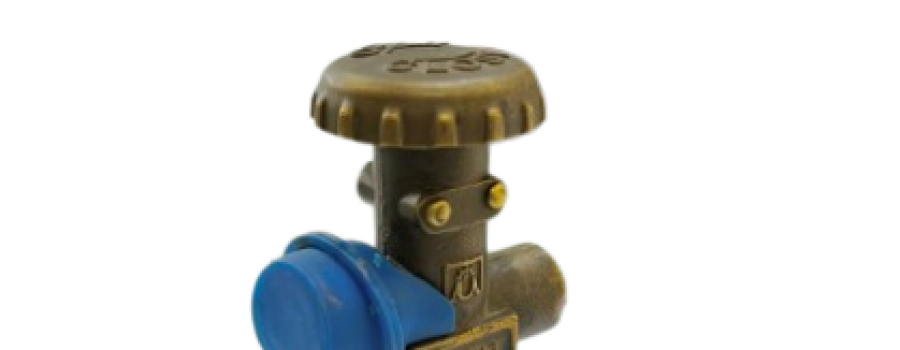
Choosing the right seals for LPG cylinder valves is an important consideration for manufacturers, distributors, and businesses involved in gas cylinder handling. The correct component must suit the valve design, perform its intended function, and meet the relevant technical and safety requirements.
However, not all LPG cylinder seals serve the same purpose. Some are designed to provide visible evidence of tampering, others protect valve openings, and certain sealing caps and plugs are specifically engineered to provide an additional pressure-tight closure.
Understanding these differences helps businesses make informed purchasing decisions and avoid selecting components that are unsuitable for their applications.
In this guide, we explain the most important factors to consider when choosing LPG cylinder valve seals, from compatibility and material selection to quality control and applicable standards.
1. Identify the Purpose of the Seal
Before choosing an LPG cylinder valve seal, determine exactly what the component needs to do. This is the first step because different sealing products are designed for different applications.
Tamper-evident seals
Tamper-evident seals are designed to show visible evidence of removal or interference. They can help distributors and consumers identify a potentially disturbed closure during delivery or inspection.
These seals are useful when product security and supply-chain accountability are priorities.
However, a tamper-evident seal does not automatically provide a pressure-tight closure.
Protective caps
Protective caps and dust covers help protect compatible valve components from dirt, debris, and physical damage during storage or transportation.
Their primary purpose is protection, unless the manufacturer specifies additional functions.
Pressure-tight sealing caps and plugs
Some caps and plugs are specifically designed and tested to form an additional pressure-tight seal with compatible LPG cylinder valves. These components must meet the applicable design, performance, and compatibility requirements.
For example, EN 16119 specifies requirements for relevant LPG sealing caps and plugs. Ordinary protective caps and tamper-evident seals that do not provide an additional pressure seal fall outside its scope.
Identifying the required function before purchasing a component helps ensure that the selected product is appropriate for its intended use.
2. Check Compatibility With the LPG Cylinder Valve
Valve compatibility is one of the most important factors in seal selection. A component that looks suitable may still be incompatible with the valve’s connection, dimensions, or sealing arrangement.
Before selecting a product, confirm the following:
-
Valve model: Identify the specific valve type and manufacturer.
-
Connection design: Verify the required connection profile and dimensions.
-
Sealing arrangement: Check how the component is intended to engage with the valve.
-
Application requirements: Confirm whether the component is intended for protection, tamper evidence, or pressure-tight sealing.
-
Manufacturer specifications: Follow the valve and sealing-component manufacturer’s documentation.
Do not force a cap or plug onto a valve simply because it appears to fit. An unsuitable component can damage the connection or fail to perform its intended function.
For pressure-tight sealing components, verify compatibility against the applicable technical specifications and approved valve configuration.
3. Select Materials Suitable for LPG Service
The material used in a sealing component affects its durability, mechanical performance, and suitability for its intended environment.
Depending on the product, materials may include engineering plastics, elastomers, metals, or combinations of materials.
Plastic materials
Plastic components are commonly used for certain protective caps and tamper-evident closures. Their performance depends on the specific formulation, component design, and expected operating conditions.
Consider mechanical strength, resistance to environmental exposure, dimensional stability, and the intended method of removal.
Elastomeric materials
Elastomers may be used as sealing elements in suitable valve assemblies or pressure-tight closures.
When an elastomer comes into contact with LPG, its compatibility with the gas and its ability to retain the required sealing properties are essential. Not every rubber or elastomer is suitable for every application.
Metallic materials
Some caps, plugs, and valve components use metals because of their mechanical properties and suitability for specific designs.
Their suitability depends on the component’s specifications, connection design, corrosion resistance, and intended service.
Why material compatibility matters
Materials used in LPG valve components must be suitable for the conditions in which they operate. Relevant technical standards address factors such as compatibility, strength, temperature, and sealing performance.
For example, ISO 14245 addresses design and testing requirements for specified self-closing LPG cylinder valves, while EN 16119 addresses applicable pressure-tight sealing caps and plugs.
Always check the manufacturer’s documentation rather than selecting a material based only on its name or appearance.
4. Consider Operating Temperature and Environmental Conditions
LPG cylinder seals may experience changes in temperature, exposure to sunlight, moisture, transportation vibration, and repeated handling.
These conditions can affect the performance of some materials and components.
When evaluating a seal, consider:
-
The expected storage and operating temperature range.
-
Exposure to sunlight and ultraviolet radiation.
-
Resistance to environmental ageing.
-
Mechanical stress during transportation and handling.
-
Expected storage duration and service conditions.
For pressure-tight sealing caps and plugs, confirm that the product has been designed and tested for the applicable operating conditions.
Do not assume that a component suitable for indoor packaging will perform equally well in outdoor industrial environments.
5. Verify Relevant Standards and Product Documentation
Applicable standards help establish the technical requirements that a component must satisfy. The relevant standard depends on the product’s function, valve type, and intended market.
Examples include:
-
EN 16119: Requirements for specified pressure-tight sealing caps and plugs used with LPG cylinder and pressure-vessel valves.
-
ISO 14245: Design, specification, testing, and inspection requirements for specified self-closing LPG cylinder valves.
-
ISO 15995: A relevant standard for specified manually operated LPG cylinder valves.
These standards cover different components and functions. A standard applicable to a valve is not automatically a certification for an external plastic cap or tamper-evident seal.
Before purchasing, request relevant product specifications, test documentation, material information, and evidence of conformity where required.
If your business operates across multiple countries, verify the applicable national and regional requirements for each destination market.
6. Evaluate Tamper Evidence and Security Features
When product security is a priority, consider how clearly the seal indicates removal or interference.
A suitable tamper-evident design may incorporate a breakable feature, a closure mechanism that shows visible damage when opened, or an identification feature used by the supplier.
Evaluate the following:
-
Is interference readily noticeable?
-
Is the seal appropriate for the intended closure?
-
Does it remain intact under normal handling conditions?
-
Can the supplier identify the product or approved design?
-
Is removal consistent with the intended procedure?
The seal should be selected according to the required security function, rather than simply choosing the strongest-looking or most expensive option.
Remember that visible tamper evidence is different from pressure-tight sealing performance. Where both functions are required, verify that the complete arrangement is suitable for the application.
7. Assess Durability and Quality Consistency
Consistent product quality matters when seals are used in large quantities across a distribution network.
Differences in dimensions, material properties, or manufacturing quality can affect fit and performance.
When evaluating a supplier, consider:
-
Consistency between production batches.
-
Dimensional accuracy and fit.
-
Material specifications and traceability.
-
Appropriate quality-control procedures.
-
Resistance to damage during normal storage and transportation.
-
Clear guidance for inspection, handling, and replacement.
For manufacturers and distributors, consistent documentation and product identification can also simplify procurement and quality-control processes.
Avoid relying solely on a sample’s appearance. Ask for appropriate technical information and verification of performance against the intended requirements.
8. Choose a Reliable Seal Supplier
The supplier’s technical knowledge and documentation are important parts of the purchasing decision.
A reliable supplier should be able to explain the intended function of the product, identify compatible applications, and provide relevant technical specifications.
Before placing an order, consider asking:
-
What is the seal designed to do?
-
Which valve models or configurations is it compatible with?
-
What material is used, and is it suitable for the intended LPG application?
-
What standards or technical requirements apply?
-
What testing and quality documentation is available?
-
Are there minimum order quantities or customization options?
-
How are defective or nonconforming components handled?
Clear answers help procurement teams compare products based on suitability and documented performance rather than price alone.
9. Compare Total Cost, Not Just Purchase Price
Price is an important consideration, particularly when purchasing sealing components in bulk. However, the lowest unit price does not necessarily provide the best overall value.
Consider the complete cost of using the product, including:
-
Unit purchase price.
-
Application equipment and labour.
-
Inspection and quality-control requirements.
-
Product damage or replacement.
-
Storage and transportation requirements.
-
Compatibility with existing equipment.
-
Supplier reliability and delivery consistency.
A component that fits correctly, meets the required specifications, and performs consistently may offer better long-term value than a cheaper product that requires additional handling or replacement.
Compare products using equivalent specifications and intended functions.
10. Follow Proper Inspection and Handling Procedures
Selecting an appropriate seal is only one part of safe LPG cylinder handling. The component must also be installed, inspected, and replaced according to the manufacturer’s instructions.
Recommended practices include:
-
Inspect the cylinder and visible closure for damage or abnormalities.
-
Check for missing, broken, or suspicious tamper-evident seals.
-
Use only compatible components for their specified purposes.
-
Do not force, modify, or improvise valve closures.
-
Have valve servicing performed by appropriately qualified personnel.
-
Follow the supplier’s procedures for damaged or questionable cylinders.
If you smell gas or suspect a leak, avoid flames and do not operate electrical switches in the affected area. Leave the area and contact the gas supplier or local emergency service from a safe location. Do not resume use until the equipment has been checked by a qualified person.
Never treat an intact tamper-evident seal as proof that a cylinder is leak-free.
Common Mistakes to Avoid When Choosing LPG Cylinder Seals
Even when a product looks suitable, several selection mistakes can lead to poor performance or incorrect use.
Choosing by appearance alone: Similar-looking components may have different dimensions, functions, or performance ratings.
Confusing protection with pressure-tight sealing: A dust cap or tamper-evident closure is not automatically a gas-tight seal.
Ignoring material compatibility: A material must be appropriate for the intended service and environmental conditions.
Overlooking technical documentation: Product specifications and applicable standards should be checked before purchase.
Selecting solely on price: Cost comparisons should include compatibility, quality consistency, and operational requirements.
Using the wrong replacement component: A substitute should be approved for the relevant valve and intended function.
Avoiding these mistakes helps businesses make better-informed procurement decisions and maintain appropriate handling procedures.
Conclusion
Choosing the right seals for LPG cylinder valves requires careful consideration of function, compatibility, materials, environmental conditions, applicable standards, and product quality.
Start by identifying whether you need tamper evidence, physical protection, or an additional pressure-tight closure. Then verify that the selected component matches the valve design, uses suitable materials, and meets the requirements for its intended application.
Working with a knowledgeable supplier and maintaining appropriate inspection procedures can further support reliable product selection and responsible LPG handling.
Ultimately, the right sealing component is not simply the one that fits or costs less. It is the one that is correctly specified, compatible with the valve, and suitable for the function it is intended to perform.
1 Comment
Temporibus deserunt sunt at id. Harum ullam dolores beatae. Accusamus voluptas itaque Dolor ad rerum voluptas Libero at aut exercitationem eligendi quas ullam. Molestias eos dolorum quaerat molestiae id. Ut mollitia aut voluptas rerum Nihil eum sapiente occaecati. Dolorem aliquid rerum ex minus. Et aut eos dolore. Nobis quas temporibus totam et. provident neque deleniti in placeat. Et vero quae qui aut. nesciunt dolores sed.